
-
Mail us
sale@tiger-transformer.com -
Phone us
(+86)15155183777 -


Mail us
sale@tiger-transformer.comPhone us
(+86)15155183777
1. Principle
Resolver is a position sensor commonly used in motor control. The function of the resolver is to accurately measure the position, speed and direction of rotation of the motor rotor , transmit these signals to the electric control, and the motor is controlled by the control algorithm of the software.
It can control the frequency and sequence of three-phase alternating current, so that the speed and direction (forward and reverse) of the drive motor can be changed. When the permanent magnet synchronous motor is working, the rotating magnetic field generated by the stator coil and the rotor rotate synchronously, and the magnetic poles of the rotating magnetic field and the rotor magnetic poles will maintain a certain angle, and the position and speed of the rotor are monitored by the resolver.
The principle of the resolver: by inputting a high-frequency sinusoidal signal to the rotor coil, which is what we often call the excitation signal (power supply of the resolver), then we can receive the induction resolver rotor in the coil The high-frequency induction signal fed back can be processed to obtain the corresponding sine and cosine information, and the absolute position of the stator can be obtained after software analysis.
2. Calibration
There are many popular terms for the calibration of resolvers in daily work, such as zero angle calibration, motor angle calibration and so on. Although the terms are different, the content and function are the same, that is, to know the angle deviation between the zero position of the resolver and the zero position of the motor.
3. Common faults
If there is a problem with the resolver, then there must be a problem with the speed.
1. When the vehicle is static (the actual motor speed is zero), the meter falsely reports that the motor has a speed;
2. Under normal high voltage conditions, the motor has no output speed when the gear is in gear and the accelerator is stepped on;< br /> 3. Cause three-phase hardware overcurrent fault;
4. Cause IGBT failure;
5. Cause motor speed to shake;
6. Cause motor stall;
7 .Vibration, abnormal noise
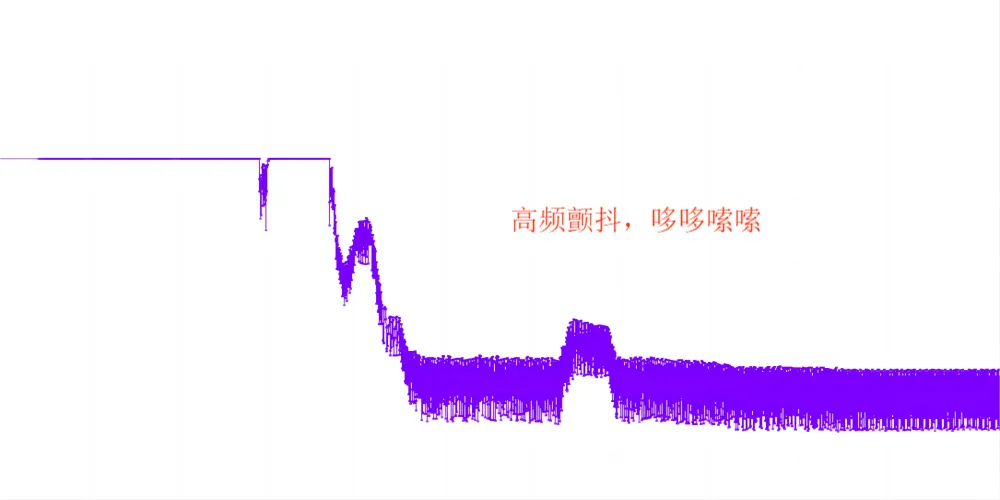
The resolver wiring harness sequence is wrongly connected. New fault: a motor has passed the software and hardware version inspection of the controller, and it enters the NVH working condition and there is a rattling sound, and the characteristic curve Abnormal, the rotational speed is negative, and finally it is found that the design of the resolver harness is wrong.
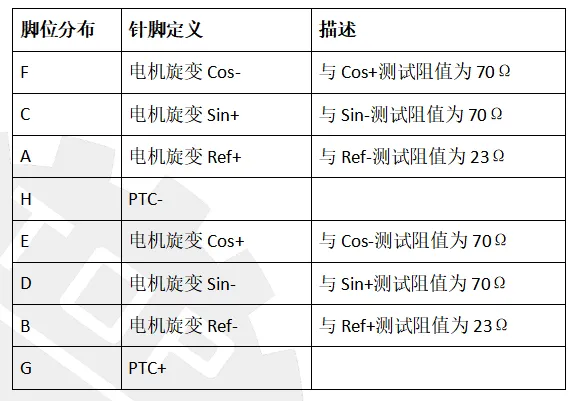
1) There are generally 6 resolver wires connected from the motor controller end to the motor end through electrical detection, which are: ref± (excitation signal), sin ± (sine signal) and cos± (cosine signal), each group of signals has its own corresponding resistance value, you can judge whether it is a resolver fault by measuring the three sets of resolver resistance values at the motor control plug-in end or the motor end
2) Characteristic curve
The motor speed is the accompanying signal of the motor torque, just like a gear, if you want the gear to rotate, you need an external force.
Normal motor speed changes smoothly and linearly.
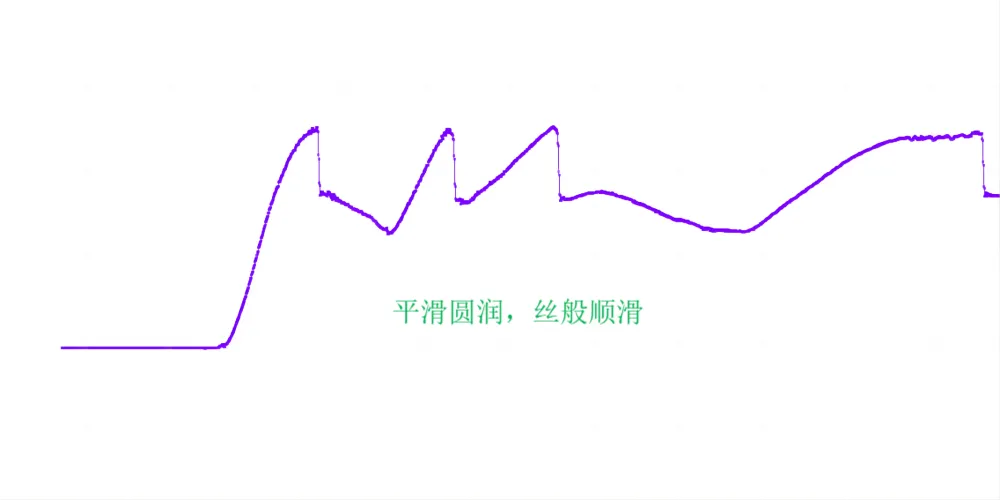
< br /> Abnormal: Due to the motor speed curve displayed under the resolver failure, it seems to have a burr. During the driving process of the vehicle, the vibration of the motor speed will cause the driving vibration of the whole vehicle
Resolver wiring harness, one end is connected to the low-voltage plug-in of the motor controller, and the other end is connected to the low-voltage plug-in of the motor. We have the following Diagnosis means:
1) Unplug the low-voltage plug-in at the motor controller end and the resolver low-voltage plug-in at the motor end, and use a multimeter to measure excitation (ref±), sine (sin±) and cosine (cos±) On-off;
2) If the resistance value of the resolver is normal, but you can’t judge whether there is a problem with the wire harness and the plug-in virtual connection, you can install the low-voltage plug-ins at both ends, and shake the wire harness vigorously. If the speed fluctuates abnormally, you still need to carefully check the wiring harness and low-voltage plug-in;
3) If the measured resolver resistance is normal (from the low-voltage plug-in end of the motor controller and the motor end), and confirm the wiring harness and plug-in OK, the motor controller needs to be replaced.
< /p>
Reviewing Editor: Liu Qing