
-
Mail us
sale@tiger-transformer.com -
Phone us
(+86)15155183777 -


Mail us
sale@tiger-transformer.comPhone us
(+86)15155183777
Ripple is mainly in five aspects: input low-frequency ripple, high-frequency ripple, common-mode ripple noise caused by parasitic parameters, ultra-high-frequency resonance noise generated during switching of power devices, and ripple caused by closed-loop regulation control. wave noise.
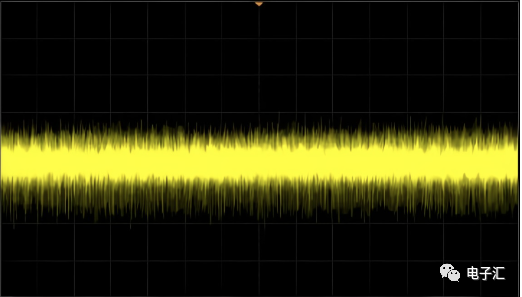
1. Low frequency ripple is related to It is related to the filter capacitor capacity of the output circuit. The capacity of the capacitor cannot be increased without limit, resulting in the residual of the output low frequency ripple. After the AC ripple is attenuated by the DC/DC converter, it appears as low-frequency noise at the output end of the switching power supply, and its size is determined by the transformation ratio of the DC/DC converter and the gain of the control system. The ripple rejection of the current mode control DC/DC converter is slightly improved compared with the voltage mode. But the low-frequency AC ripple at its output is still relatively large. In order to realize the low ripple output of the switching power supply, it is necessary to take filtering measures for the low frequency power supply ripple. It can be eliminated by using pre-stage pre-stabilization and increasing the closed-loop gain of the DC/DC converter.
Several commonly used methods for low-frequency ripple suppression:
a. Increase the inductance and capacitance parameters of the output low-frequency filter to reduce low-frequency ripple to the desired indicator.
b. Adopt feed-forward control method to reduce low-frequency ripple components.
2. The high-frequency ripple noise comes from the high-frequency power switching conversion circuit. In the circuit, if the power device is used to perform high-frequency switching conversion on the input DC voltage and then rectify and filter to realize the stable voltage output, the output terminal contains high-frequency ripple at the same frequency as the switching frequency, and its impact on the external circuit is mainly It is related to the conversion frequency of the switching power supply and the structure and parameters of the output filter. In the design, the operating frequency of the power converter should be increased as much as possible to reduce the filtering requirements for high-frequency switching ripple.
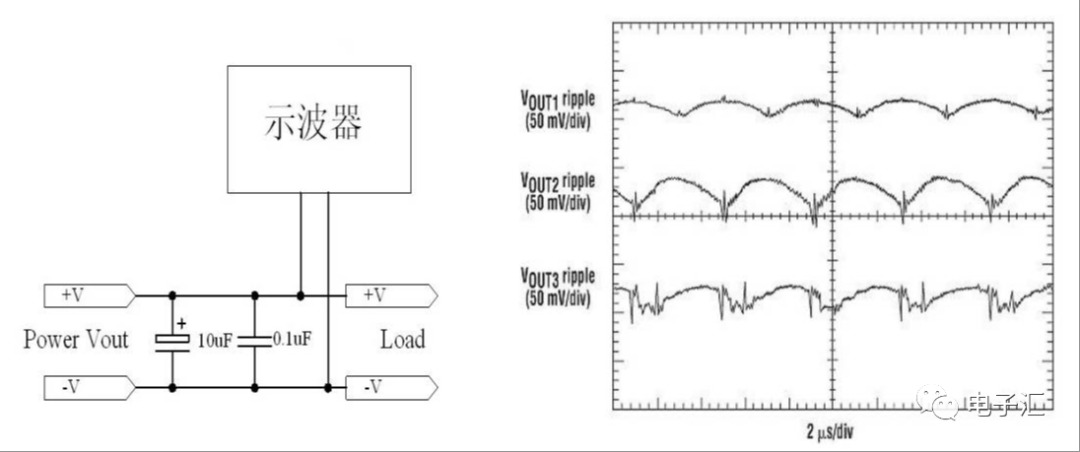
High frequency ripple suppression The purpose is to provide a path for high-frequency ripple, and the commonly used methods are as follows:
a. Increase the operating frequency of the switching power supply to increase the frequency of high-frequency ripple, which is conducive to suppressing high output frequency ripple.
b. Increasing the output high-frequency filter can suppress the output high-frequency ripple.
c. Use multi-stage filtering.
3. Due to the parasitic capacitance between the power device and the bottom plate of the radiator and the primary and secondary sides of the transformer, there is a parasitic inductance in the wire, so when the rectangular wave voltage acts on the power device, the output of the switching power supply is therefore Common mode ripple noise will be generated. Reduce and control the parasitic capacitance between power devices, transformers and chassis ground, and add common-mode suppression inductors and capacitors on the output side to reduce output common-mode ripple noise.
Common methods to reduce output common-mode ripple noise:
a. The output adopts a specially designed EMI filter.
b. Reduce the switching glitch amplitude.
4. Ultra-high-frequency resonance noise mainly comes from the resonance of diode junction capacitance during reverse recovery of high-frequency rectifier diodes, power device junction capacitance and line parasitic inductance when power devices are switched, and the frequency is generally 1-10MHz , Ultra-high frequency resonant noise can be reduced by selecting diodes with soft recovery characteristics, switching tubes with small junction capacitance and reducing wiring length.
Switching power supplies require closed-loop control of the output voltage, and improper design of regulator parameters will also cause ripples. When the output fluctuates, it enters the regulator loop through the feedback network, which may cause the self-excited oscillation of the regulator, causing additional ripple. This ripple voltage generally has no fixed frequency. In the switching DC power supply, the increase of the output ripple is often caused by the improper selection of the regulator parameters.
This part of the ripple can be suppressed by the following methods:
a. Add a compensation network to the ground at the output of the regulator, and the compensation of the regulator can be Suppresses the increase in ripple caused by regulator self-excitation.
b. Reasonably choose the open-loop magnification of the closed-loop regulator and the parameters of the closed-loop regulator. If the open-loop magnification is too large, sometimes it will cause the regulator to oscillate or self-excite, which will increase the output ripple content. Too small open-loop magnification will lead to poor output voltage stability and increased ripple content. Therefore, the open-loop magnification of the regulator and the parameters of the closed-loop regulator should be selected reasonably, and adjusted according to the load condition during debugging.
c. No pure lag filtering link is added in the feedback channel. The delay lag is minimized to increase the rapidity and timeliness of the closed-loop adjustment, which is beneficial to suppressing the output voltage ripple.