-
Mail us
sale@tiger-transformer.com -
Phone us
(+86)15155183777 -


Mail us
sale@tiger-transformer.comPhone us
(+86)15155183777
1. Overview:
SVPWM is easy to digital control because of its high DC voltage utilization rate and low harmonic content. With the development of SVPWM in recent years, it has broken away from the original intention of AC motor flux trajectory control, forming a kind of PWM control method in power electronics technology. Use Mathcad to build a model from the three-phase inverter topology and mathematical concepts to understand and explain SVPWM.
2. Basic concepts:
Before learning SVPWM, you need to introduce some basic concepts, namely phasor, vector, space, and time.
Phasor
Represents three elements of steady-state sine quantity, amplitude, frequency, and initial phase. That is, the instantaneous value expression of the sine quantity can be written, also known as the analytical formula, and the waveform diagram can be drawn through the analytical formula.
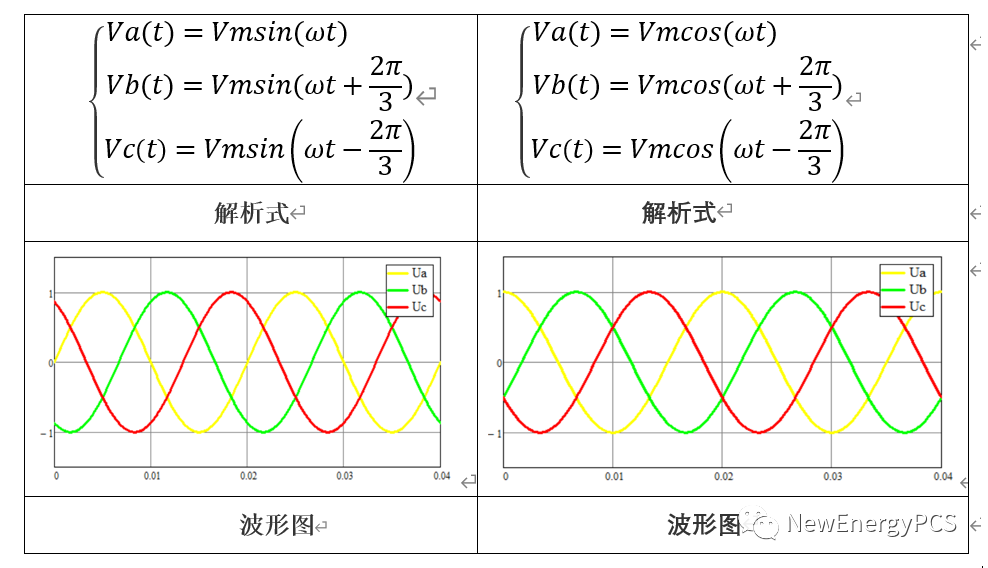
Va, Vb, Vc, and the maximum amplitude are all It is Vm, the angular frequency is ω, and the initial phase φ0 is 0, 2π/3, -2π/3 respectively. It can be found that the calculation of the sine quantity is one of the sine functions, whether it is using the waveform graph or the expression of the instantaneous value. Interval calculation is very inconvenient, so the phasor is artificially defined, and the phasor representation of the sine quantity is introduced.
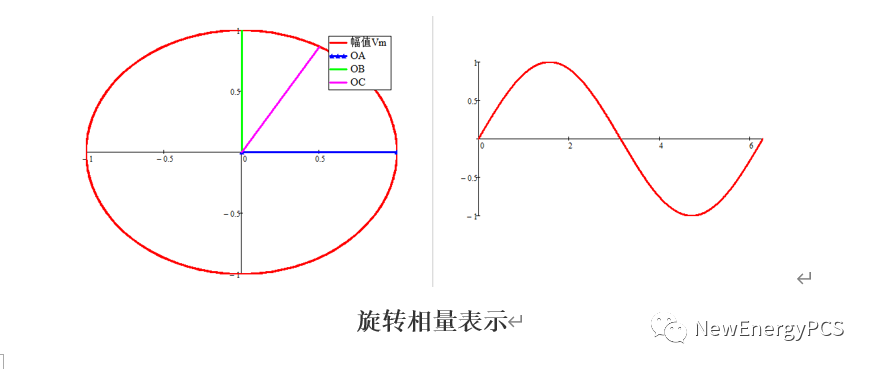
As shown in the figure above, in the Cartesian coordinate system, Construct a directed line segment OA whose length is the maximum value of the sinusoidal amplitude Vm, the angle between its initial position and the positive direction of the x-axis is equal to the initial phase, and rotate counterclockwise at a constant speed with the angular frequency ω of the sinusoidal alternating current as the angular velocity, then The angle between the rotating phasor and the x-axis at any instant is the phase of the sinusoidal alternating current, and its projection on the y-axis is the instantaneous value of the sinusoidal alternating current. At this time, using the rotating phasor can completely reflect the three elements of the sine quantity and the changing law.
Pay attention when applying phasor diagrams:
In the same phasor diagram, the frequency of each sinusoidal alternating current is the same
In the same phasor diagram, the phasors of the same unit should be drawn in the same proportion
Take the horizontal positive direction of the rectangular coordinate axis as the reference direction, that is, the counterclockwise rotation angle is positive, and vice versa is negative.
After the phasor represents the sine quantity, their addition and subtraction operations can be performed according to the parallelogram law.
Phasor diagrams, waveform diagrams, and analytical expressions are different representations of sine quantities, and they have corresponding relationships, but they are not equal in mathematics.
Conclusion 1:
The sine quantity represented by the phasor, to distinguish Va, Vb, Vc, only need to put their The initial phases are marked separately, that is, Va, Vb, and Vc, which can be recorded as ∠0, ∠-120°, and ∠120° respectively. In the same circuit system, the frequency is generally the same, and the amplitude varies. Therefore, adding amplitude information to the initial phase is the phasor expression of this system. That is, Va=Vm∠0, Vb= Vm∠-120, Vc= Vm∠120
Conclusion 2:
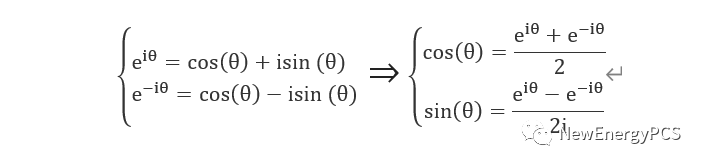
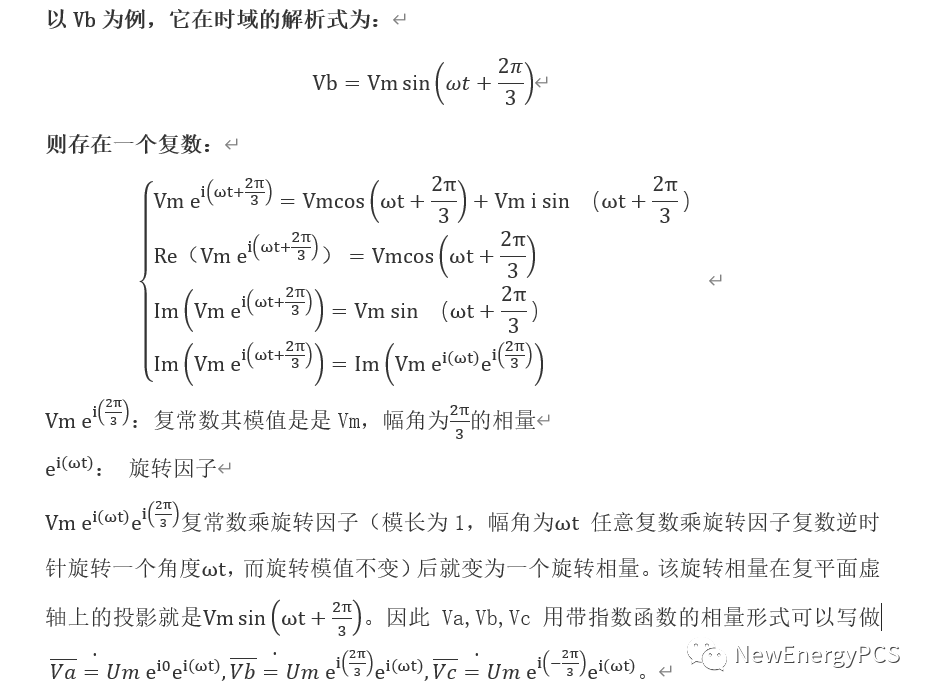
By using the rotating phasor Representing the sine quantity, it can be found that the operation of the sine quantity has been converted into a very simple system, and it can be seen that the representation of the phasor actually converts the sine quantity into a polar coordinate representation. In this way, Euler's formula can be used to calculate very conveniently.
Vector
In physics, I have studied velocity vector, force vector, etc. , they are all vectors with magnitude and direction, they are generally called space vectors, and their addition and subtraction operations follow the parallelogram rule. The rotating phasor used to represent the steady-state sine quantity is different from the vector in mechanics. It is only the quantity whose phase changes with time. Although the addition and subtraction operations also follow the parallelogram law, it has nothing to do with the direction. It can be seen that the phasor represents the vector and has a clear physical meaning. But a vector is also a vector, its magnitude can represent the magnitude, and its direction can represent the phase.
Space
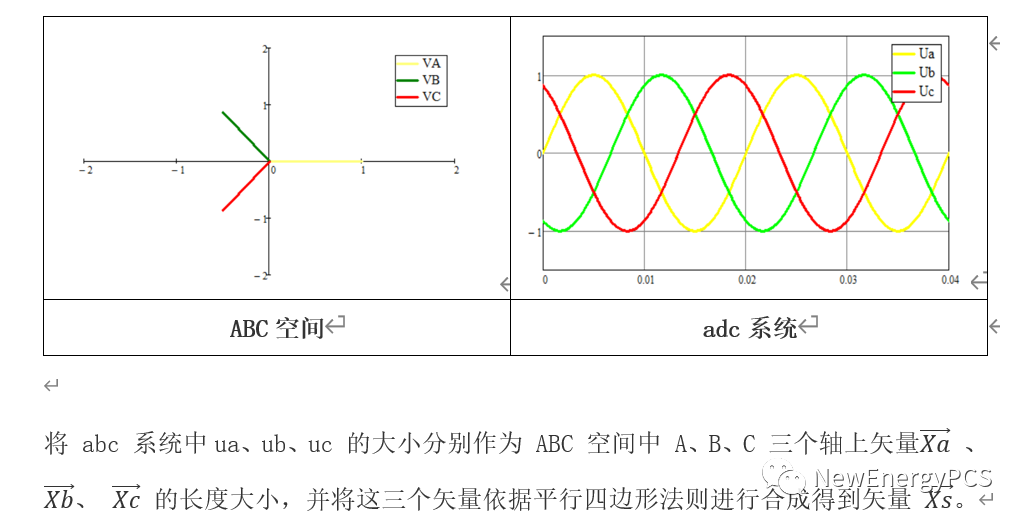
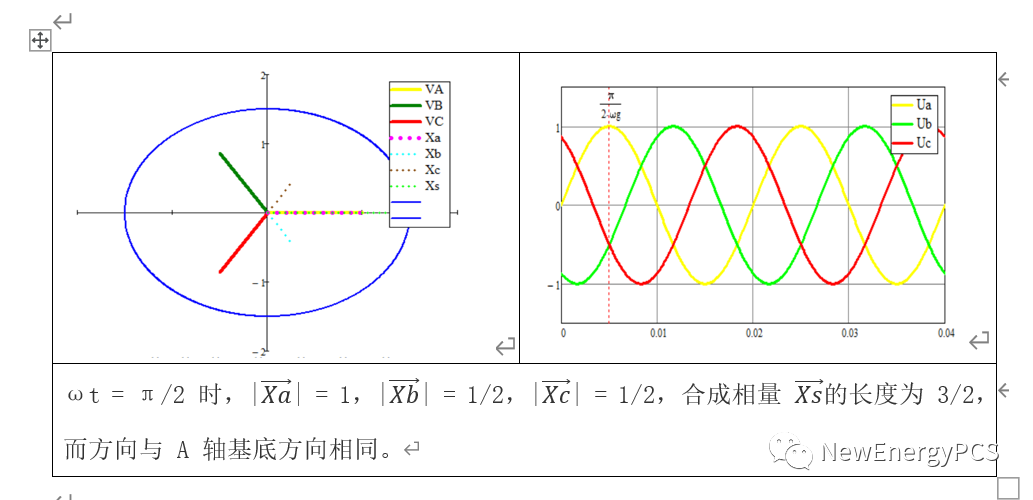
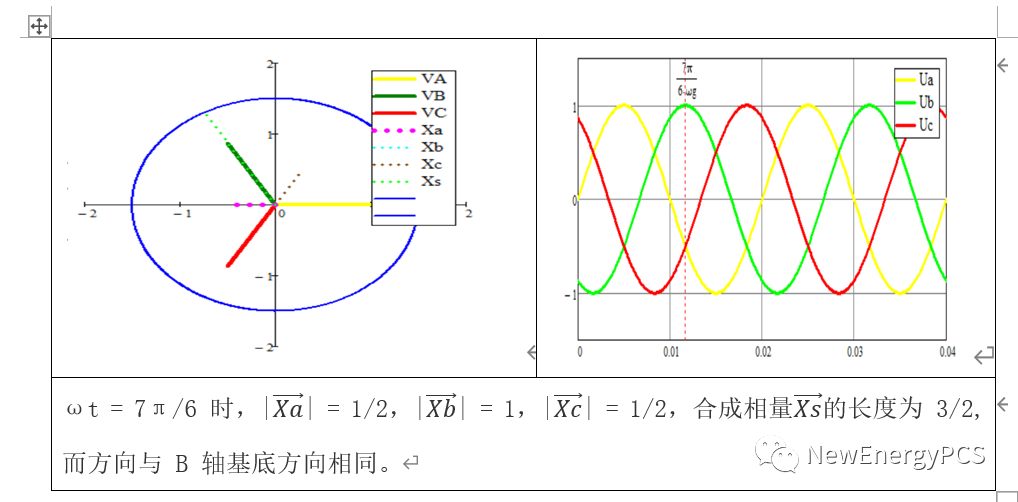
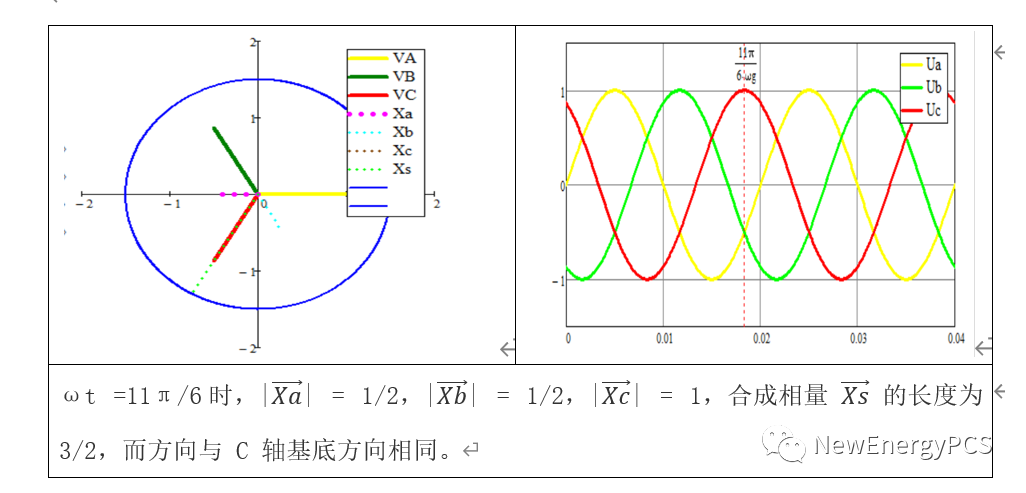
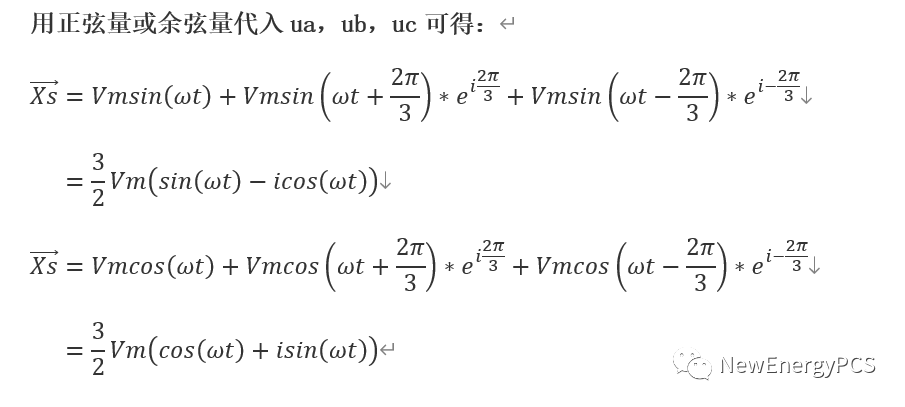
Any vector must exist in a certain space, and so does the vector defined by the phasor, and its vector space is the complex plane. For example, in the ABC space, there are three ABC axes, and the base lengths on these three axes are all 1, and the directions increase by 120° in sequence. At the same time, there are three-phase symmetrical sinusoidal quantities ua, ub, uc with an amplitude of 1, and their phases lag by 120° in turn, which is recorded as "adc system".
Conclusion:
The above formula can prove that the composite vector is a length of 3/2 constant and in The vector rotates at a constant speed in space, the direction of rotation is counterclockwise, and the rotation speed is equal to the angular frequency ω in the abc system. Here, sin and cos are used to prove, because there is a π/2 phase difference between sin and cos, and the clark transformation will cause the α axis to be different from the β axis.
Time
In the analysis of sinusoidal steady-state signals, time information is actually highly bound together with frequency information. In phasor expression , the time signal is omitted along with the frequency system. In the space vector system (rotating phasor), frequency and time can be discussed, but the frequency here is not the frequency in the sinusoidal steady-state signal, but the angular velocity of the space vector rotation.